


Myopic Control Contact Lenses
June 10, 2025Varilux XR Advanced Progressive Lenses -Optic One Abu Dhabi
July 5, 2025Myopia control for children · Updated October 2026
Essilor Stellest 2.0 Lenses in Abu Dhabi: Stronger Myopia Control for Your Child
Stellest 2.0 is the new generation of Essilor’s myopia control lenses for children. The key change: Stellest 2.0 (H.A.L.T. MAX) increases the power and asphericity of its tiny lenslets to strengthen the “slow down” signal sent to the growing eye, while your child sees just as clearly as before. Here is what is new, who it suits, and why the way the lenses are measured and fitted makes such a difference.
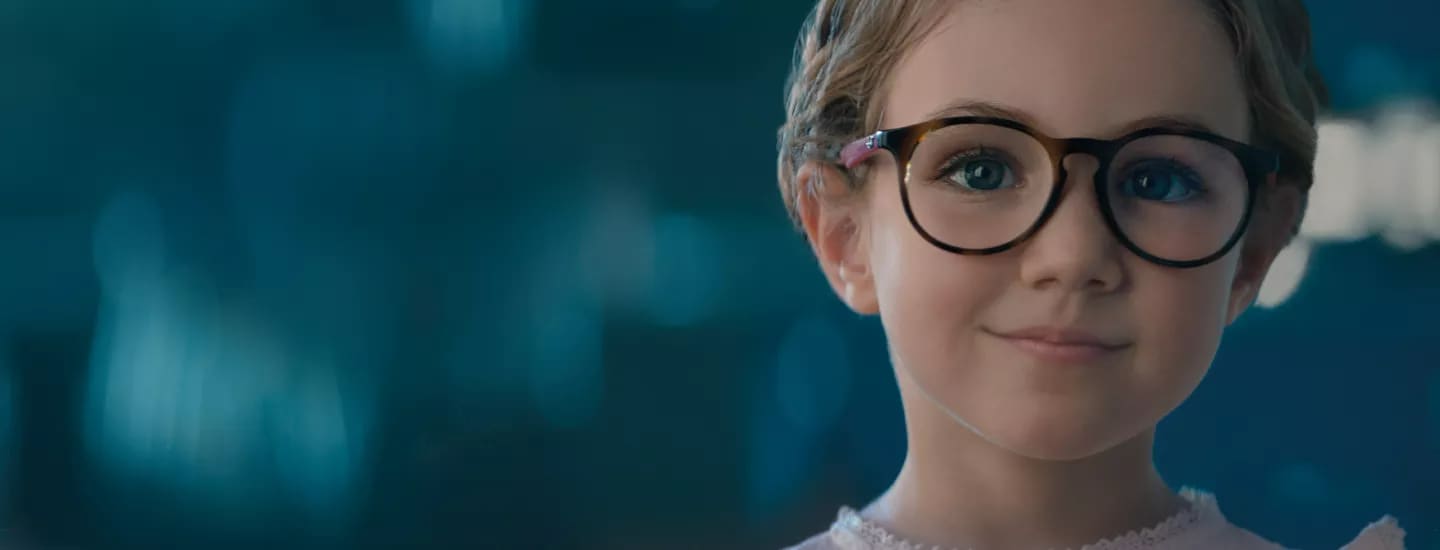
- What it is: glasses lenses for short-sighted (myopic) children that correct their vision and help slow down how fast their myopia gets worse.
- What is new: Stellest 2.0 (H.A.L.T. MAX) increases the power and asphericity of the lenslets to enhance the myopia control signal. It also adds an extra ring of lenslets and comes in larger lens sizes for more frame choice.
- The result: in a one-year study, eyes wearing Stellest 2.0 grew about half as much as eyes wearing the first-generation Stellest lens.
- Where to get it: Optic One, Hamdan Street, Abu Dhabi, with families visiting from across the UAE.
- What matters most: precise measurement and fitting, so the clear centre of each lens sits exactly in front of your child’s pupil.
Why myopia in children matters
Myopia (short-sightedness) means distant things look blurry. It usually starts in childhood and gets worse as the eye keeps growing longer. Researchers expect about half of the world’s population to be short-sighted by 2050. More time on screens, more close-up work and less time outdoors are all part of the reason.
Blurry vision can be fixed with glasses. The real concern is how high the myopia climbs. A child whose myopia starts young has more years for it to increase. High myopia in adulthood raises the risk of serious eye problems later in life, such as retinal detachment, myopic macular damage and glaucoma.
That is why eye doctors now aim to slow down myopia, not just correct it. Every bit of progression you prevent in childhood counts for life.
How Stellest lenses work
A regular lens only corrects blurry vision. A Stellest lens does two jobs at once:
- A clear centre gives your child sharp distance vision for the board, sports and everyday life.
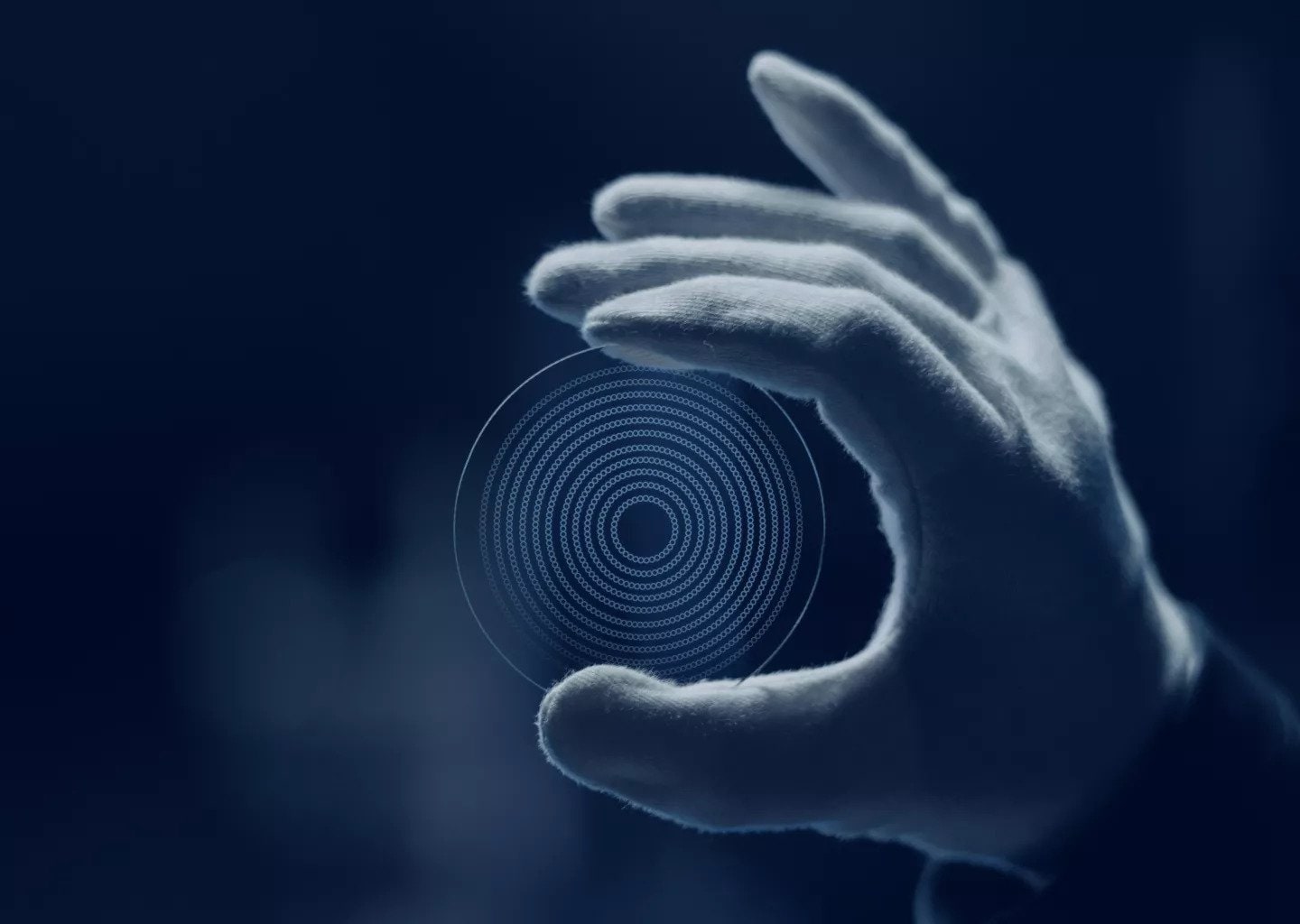
- Rings of tiny lenslets around the centre, almost invisible to others, form a zone of “non-focused” light just in front of the retina. This acts as a signal that helps slow down the eye’s growth, which is what drives myopia.
Essilor calls this design H.A.L.T. (Highly Aspherical Lenslet Target). The first-generation Stellest lens is well studied. In a two-year clinical trial published in JAMA Ophthalmology, it slowed myopia progression by 67% on average compared with ordinary lenses in children who wore it at least 12 hours a day. In September 2025, it became the first glasses lens to receive US FDA market authorisation for slowing myopia in children.
What is new in Stellest 2.0
Stellest 2.0 keeps the same idea as the first lens: a clear centre, surrounded by rings of tiny lenslets that send a “slow down” signal to the eye. The main difference is in the lenslets themselves.
Stellest 2.0 (H.A.L.T. MAX) increases the power and asphericity of these lenslets to enhance that signal. In simple terms, the stronger, more aspherical lenslets create a bigger zone of non-focused (defocused) light and place it further in front of the retina. By design, this zone is twice as deep as with the first-generation lens. That stronger signal is what the research links to slower eye growth.

The other changes are practical extras: one more ring of lenslets, larger lens sizes for more frame choice, and new markings so the two generations can be told apart.
| Feature | Stellest (first generation) | Stellest 2.0 |
|---|---|---|
| Technology | H.A.L.T. | H.A.L.T. MAX: increased lenslet power and asphericity |
| Myopia control signal | Standard | Enhanced: twice the depth of non-focused light, by design |
| Rings of lenslets | 11 | 12 |
| Largest lens size | 70 mm | 75 mm, so more frames are possible |
| Clear vision | Sharp | Same sharpness as the first generation |
| Material | Airwear polycarbonate | Airwear polycarbonate |
| How to tell them apart | Standard markings | New micro-engravings, including a “planetary” ring |
What stays the same is just as important. The lenses are made from Airwear polycarbonate, which is lighter and thinner than standard plastic, highly impact-resistant (a must for active children) and blocks 100% of UV. They come with Crizal coating, which helps resist smudges and scratches and makes cleaning easy.
A note on “twice the signal”: this describes how the lens is designed. It does not mean the lens has double the power or that results are exactly doubled. The research results are explained below.
What the research shows
Stellest 2.0 was tested in a one-year study in Singapore with 50 short-sighted children aged 6 to 10. Each child wore a first-generation Stellest lens in one eye and a Stellest 2.0 lens in the other, then the lenses were swapped halfway through. This lets researchers compare the two lenses in the same child.
- Eye growth was almost halved. Over the year, eyes wearing Stellest 2.0 grew about 0.12 mm, against about 0.23 mm with the first-generation lens.
- Younger children benefited most. The extra effect was strongest in children aged about 8½ or younger, and in children whose eyes were growing faster.
- Vision stayed sharp. There was no difference in clear vision between the two generations, and no problems with eye alignment or depth perception.
- Children wore them well. On average, the children wore their glasses more than 13 hours a day, and no lens-related side effects were reported.
To be fair and clear: the study was run by Essilor researchers and published in the journal Translational Vision Science & Technology (2025). Stellest 2.0 is new, so longer-term results are still being collected. Like every myopia control method, it slows myopia down. It does not stop or reverse it.
Who Stellest 2.0 is for
Stellest 2.0 is for children and teenagers who are already short-sighted. It may be especially worth discussing if your child:
- started needing glasses at a young age (studies included children from 6 years old)
- needs a stronger prescription every year
- has one or both parents who are short-sighted
- already wears first-generation Stellest lenses but is still progressing faster than expected
- has astigmatism as well as myopia (Stellest lenses cover a wide range of prescriptions)
Signs that your child may be short-sighted, or that their myopia is increasing, include squinting at the board or TV, sitting very close to screens, headaches after school, and holding books or tablets close to the face.
The right myopia plan depends on your child’s age, prescription and how quickly it is changing. Your child’s eye doctor will advise whether Stellest 2.0 is right, or whether another option such as myopia control contact lenses or orthokeratology may suit better.
Why accurate measurements matter so much
With a regular single-vision lens, a small fitting error usually goes unnoticed. With Stellest, it matters a lot. The lens has a clear centre surrounded by rings of lenslets, so that centre must sit exactly in front of each pupil when your child looks straight ahead.
| If the lens is fitted… | What your child experiences |
|---|---|
| Centred precisely on each pupil | Sharp distance vision through the clear centre, with the lenslet rings evenly around it, as the lens was designed and tested |
| A few millimetres off | Your child may look through the lenslets instead of the clear centre. Vision can feel less sharp, and the myopia control signal reaches the eye unevenly |
Each eye is measured on its own. Faces are rarely perfectly symmetrical, so the distance from the nose to the right pupil is often different from the left, and one pupil may sit slightly higher. Children also have small faces and small frames, so a couple of millimetres is a big difference.
How we measure at Optic One: digitally, eye by eye
For Stellest lenses, we don’t rely on a ruler and a pen mark. We use a digital measuring system on a tablet:
- Your child wears the chosen frame, adjusted so it sits comfortably and level on the nose and ears.
- We take a quick set of photos while your child looks naturally into the distance. It takes only a few seconds, which suits children who can’t sit still for long.
- The software finds the centre of each pupil and the outline of the frame, then measures each eye separately: how far it is from the centre of the nose bridge, and how high it sits in the frame.
- It also measures how the frame sits on the face: its tilt, its wrap, and how far the lenses are from the eyes. These all affect where the optical zones of the lens end up in front of the eye.
- We review the measurements on screen before ordering, and can repeat them in seconds if your child moved or blinked.
The lens lab then positions the centre of the lenslet rings exactly on these points. When the glasses are ready, we check the reference marks on the lenses against your child’s pupils before you take them home.
Children grow, and frames get bent at school and on the playground. If the frame slips down the nose, your child ends up looking through the lenslets instead of the clear centre. Bring the glasses in whenever they look crooked or loose. Adjustments are quick, and they keep the lenses working as intended.
Choosing the right frame for Stellest 2.0
The frame is part of the treatment. A good Stellest frame:
- Is not wider than your child’s face, so the eyes sit near the middle of each lens.
- Is not too narrow or shallow. There needs to be enough lens below and around the pupil for the lenslet rings to work.
- Sits upright and fairly close to the eyes, rather than tilted far forward.
- Stays in place during play, with a good nose fit and comfortable arms, so it does not slide down.
Because Stellest 2.0 comes in larger lens sizes (up to 75 mm), more frame shapes are now possible. We help you choose from our kids’ eyeglasses, including flexible, durable frames such as NanoVista and Miraflex, and check each one against your child’s measurements before ordering.
Getting the best results from Stellest 2.0
- Wear them all day, every day. They should be your child’s main glasses, taken off only for sleeping and showering. In the studies, children wore them 12–13 hours a day or more. Wearing them only at school can reduce the effect.
- Give it a few days. Most children get used to the lenses within the first week.
- Encourage time outdoors. Daylight is good for children’s eyes. Eye doctors commonly recommend around two hours outside a day, in the cooler parts of the day here in the UAE.
- Take screen breaks. Every 20 minutes of close work, look at something far away for 20 seconds.
- Keep up with check-ups. Most children are reviewed about every six months, so their eye doctor can track prescription and eye growth.
Stellest in sunglasses too
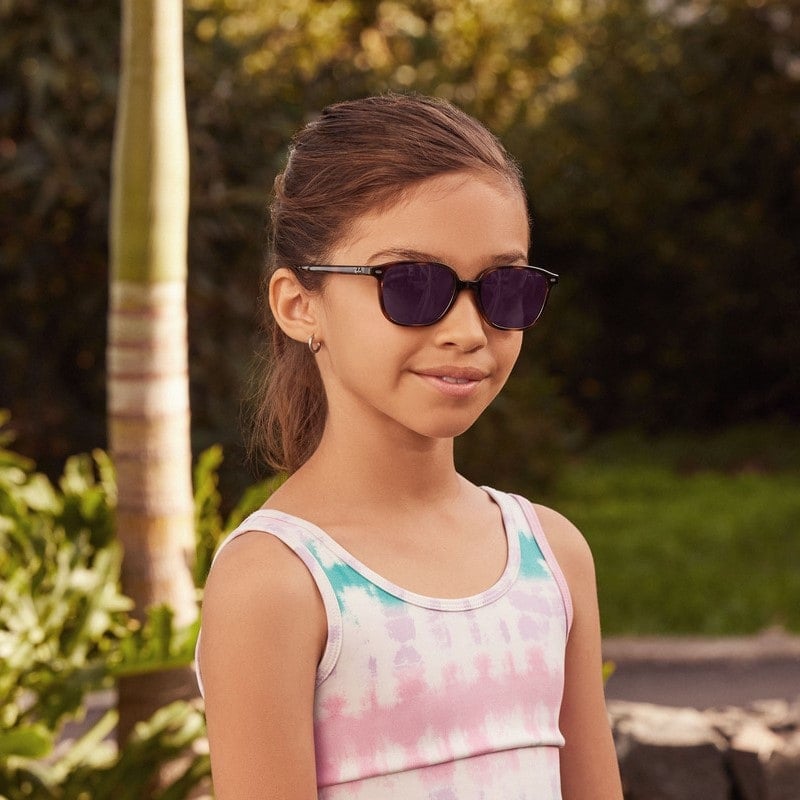
In the UAE sun, many children need a second pair for outdoor time. Stellest myopia control lenses can also be made as prescription sunglasses with a sun tint, so your child keeps the myopia control benefit outside too. Ask us about the tint colours available for Stellest 2.0.
Getting Stellest 2.0 at Optic One, Abu Dhabi
- Prescription: bring your child’s current prescription from their eye doctor.
- Frame choice: we help your child pick a frame they like that also suits Stellest 2.0.
- Digital measurements: each eye is measured precisely with our tablet-based system.
- Ordering: your lenses are made to your child’s prescription and measurements. We confirm the expected date when you order.
- Fitting and handover: we check the centring, adjust the frame and show your child how to wear and clean the glasses.
- Aftercare: come back any time for adjustments, and keep up with regular eye check-ups.
Families visit us from across Abu Dhabi, Dubai and the rest of the UAE. Because the measurements are taken in person, Stellest lenses need one visit to our Hamdan Street store.
Ask us about Stellest 2.0 for your child
- Expert advice from our team at our DOH-licensed store on Hamdan Street, Abu Dhabi.
- Precise digital measurements of each eye for accurate lens centring.
- Child-friendly frames that suit Stellest 2.0 and stay put during play.
Next to Jawhara Jewellery, near Big Mart Hypermarket, opposite WTC Mall, Hamdan Bin Mohammed Street, Abu Dhabi.
Common questions about Stellest 2.0
Where can I get Stellest 2.0 lenses in Abu Dhabi or the UAE?
You can get Essilor Stellest 2.0 lenses at Optic One on Hamdan Bin Mohammed Street, Abu Dhabi, opposite WTC Mall. We take precise digital measurements of each eye, help choose a suitable frame, and fit the finished glasses. Families visit us from across the UAE.
What is the difference between Stellest and Stellest 2.0?
The main difference is the lenslets. Stellest 2.0 (H.A.L.T. MAX) increases the power and asphericity of the lenslets to enhance the myopia control signal. By design, this gives twice the depth of non-focused light in front of the retina. It also has 12 rings of lenslets instead of 11, comes in larger sizes (up to 75 mm) for more frame choice, and has new micro-engravings to tell it apart. Vision through the lens is just as sharp as the first generation.
Is Stellest 2.0 more effective than the first Stellest lens?
In a one-year study of 50 children aged 6 to 10, eyes wearing Stellest 2.0 grew about half as much as eyes wearing the first-generation lens (about 0.12 mm against 0.23 mm). The extra benefit was strongest in younger children and in children whose eyes were growing faster.
My child already wears Stellest. Should we switch to Stellest 2.0?
If your child’s myopia is still increasing, or it is time for new glasses anyway, Stellest 2.0 is worth discussing with your child’s eye doctor. The switch is simple, because the lenses are worn in the same way.
What age is Stellest 2.0 suitable for?
Stellest lenses are designed for short-sighted children and teenagers. The Stellest 2.0 study included children as young as 6, and younger children showed the strongest extra benefit. Your child’s eye doctor will advise on the right age to start.
How many hours a day should my child wear Stellest lenses?
All day, every day, as their main glasses: at least 12 hours a day, taking them off only to sleep or shower. Wearing them only at school or on some days can reduce the effect.
Why do Stellest lenses need such precise measurements?
The lens has a clear centre surrounded by rings of lenslets. The clear centre must sit exactly in front of each pupil, so your child sees sharply and the myopia control signal reaches the eye evenly. At Optic One, we measure each eye digitally on a tablet, including the position of the pupils, the frame tilt and the distance from the eyes.
Will Stellest 2.0 stop my child’s myopia?
No lens can stop or reverse myopia. Stellest 2.0 is designed to slow it down, which can mean a lower prescription and lower long-term eye risks in adulthood. Regular check-ups show how well it is working for your child.
Can Stellest lenses be made as sunglasses?
Yes. Stellest myopia control lenses can be made as prescription sunglasses with a sun tint, which is useful for outdoor time in the UAE. Ask us about the colours available for Stellest 2.0.

