

First Time Wearing Contact Lenses? Here’s How to Start in Abu Dhabi
November 14, 2026Progressive lens guide · UAE
ZEISS ClearMind vs Varilux XR vs HOYA MySense: Which Premium Progressive Lens Suits You?
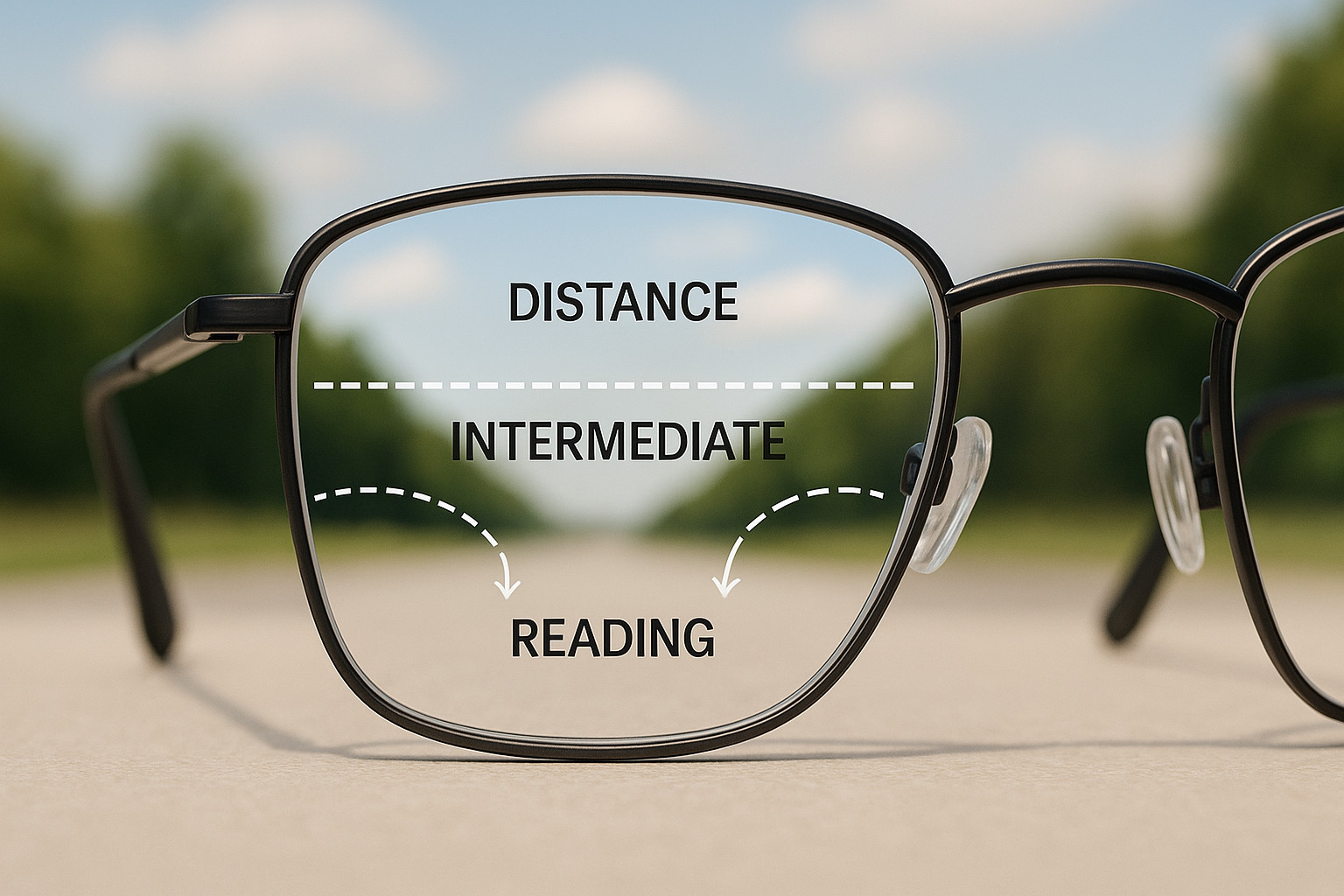
ZEISS, Essilor and HOYA each make a top-of-the-range progressive lens, and each brand says theirs is the most advanced. All three really are excellent, but they are built around different ideas. This guide explains what each lens does, compares them on the things you notice every day, and helps you work out which one fits your eyes and your life.
Why there is no single “best” progressive lens
Most comparisons you find online come from a brand, or from a store that sells only one of these lenses. Not surprisingly, they usually decide that the lens they sell is the winner.
The truth is simpler. Each of these three lenses has a different design idea, real strengths in some situations, and less of an edge in others. The right one for you depends mostly on three things:
- How you use your eyes: long hours on screens, driving and moving around, or a mix.
- Your prescription: for example, whether your two eyes need quite different powers.
- How well the lens is measured and fitted: a premium lens fitted badly will not feel premium.
New to progressives? Start with our guide to progressive lenses in Abu Dhabi, then come back here.
ZEISS ClearMind progressive lenses
ClearMind is the newest of the three. ZEISS announced it in January 2026, and it reached stores from April 2026. It is built around one finding from the ZEISS Vision Science Lab: blur in a lens makes your brain work harder, even the normal blur at the sides of a correctly made progressive lens.
- NeurOptix technology: lines up the clear areas of the lens with the paths your eyes naturally follow, and moves blur to areas you look through less.
- Wider reading area: up to 41% larger zones of clear near vision than ZEISS SmartLife progressive lenses, ZEISS’s previous range.
- Fast to get used to: in a ZEISS wearer survey, 51% of progressive wearers adapted within one hour and 88% within a few days.
- Less mental effort: in a ZEISS test against standard ZEISS progressives, wearers rated their mental effort lower, and 76% of surveyed wearers said the lenses helped them concentrate.
- Several levels: from ClearMind Pure and Plus up to Superb and the fully personalised ClearMind Individual 3, which uses your own measurements and frame.
Best for: people who spend long days on a laptop, tablet and phone and feel tired by evening. Read more in our ZEISS ClearMind guide.
Varilux XR series (Essilor)
Varilux created the progressive lens in 1959, and no brand has made progressives for longer. The XR series is the newest generation, and Essilor calls it the first eye-responsive progressive lens.
- Behavioural AI: Essilor used more than 1 million data points (wearer tests, eye behaviour and near-vision measurements) to predict how a person’s eyes move as they look around.
- Sharp vision in motion: the design aims for a larger “volume” of sharp, easy vision as you move your eyes and head. Essilor’s calculations show up to 49% more than the previous Varilux X series.
- Easy start: in an Essilor wearer study, 95% of wearers adapted from the first day.
- Smooth middle zone: Varilux is known for a comfortable intermediate area, the distance of a car dashboard or a desktop screen.
Best for: active people who are always on the move, drivers, and people wearing progressives for the first time. See our Varilux XR guide.
HOYA iD MySense
HOYA takes a different route to personalisation. MySense is HOYA’s first progressive lens designed around what it calls your Visual Sensory Intelligence: how much blur you tolerate, how you shift your gaze between distances, and the posture you use to see clearly.
- Measured, not guessed: short visuSense measurements (GazeTrack and ClarityTrack) plus the iSelect lifestyle questionnaire decide how your lens is designed.
- Integrated Double Surface design: the lens design is shared between the front and back surfaces to reduce distortion and give a smooth change between distances.
- Two eyes working together: HOYA’s Binocular Harmonization Technology balances the difference when your two eyes need different powers, and 3D Binocular Vision reduces the “swaying” feeling at the sides of the lens.
- AdaptEase: made for easy adaptation, wide fields of view and a comfortable middle zone for digital devices.
- Two levels: Hoyalux iD MySense and MySense Prestige.
Best for: people whose eyes have quite different prescriptions, people who struggled with progressives before, and anyone who wants a lens shaped around their own habits. More in our HOYA lenses guide.
Head-to-head: four things that matter in daily life
All three are a big step up from older progressive lenses. Here is how they compare on the things you actually notice.
| What you notice | ZEISS ClearMind | Varilux XR | HOYA iD MySense |
|---|---|---|---|
| Getting used to them | Strong data: about half of wearers adapted within an hour | Smoothest start for first-time wearers; 95% adapted from day one | Strong when your two eyes have different prescriptions |
| Reading area | Clearest claim: up to 41% larger near zones | Best known for a wide, comfortable middle zone | Near and middle zones shaped to your own measurements |
| Long screen days | Built for this: designed to cut mental effort from blur | Very good, especially when you switch distances often | Good, with a middle zone made for digital devices |
| Personalisation | Levels up to fully personalised Individual 3 | AI-predicted eye behaviour, with personal measurement options | Deepest focus on your personal habits and posture |
Is a premium lens always worth it? If your prescription is simple and you don’t spend long hours on screens, the difference between these lenses and a good mid-range progressive is smaller than you might think. If you have a strong or uneven prescription, work long hours at a screen, or found progressives hard before, a premium design makes a real difference. Our optometrists will tell you honestly which group you are in.
Why the fitting matters more than the brand
A progressive lens has its clear zones in exact places. If the lens isn’t lined up with your eyes, even the best design will feel blurry or uncomfortable. That is why the measurements matter as much as the brand:
- Pupil distance and fitting height: where each eye sits in the frame.
- Vertex distance: how far the lens sits from your eye.
- Frame tilt and wrap: the angle of the frame on your face.
- How you read: how far you hold your phone or book, and how you move your head and eyes.
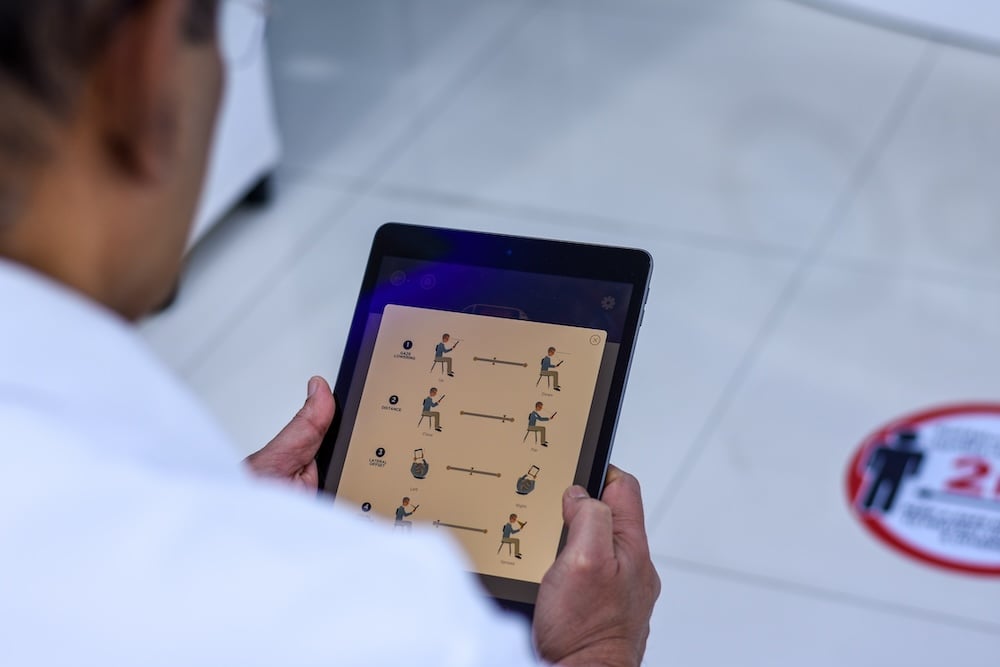
At Optic One we measure with digital measuring systems, and our optometrists fit all three brands. A good question to ask any optician: how many of these lenses have you actually fitted? Experience matters as much as the lens.
Quick answer: which lens for which person
Long days on screens → ZEISS ClearMind
If you work on a laptop all day and your eyes and head feel tired by evening, ClearMind is built for you.
Active life, or first progressives → Varilux XR
If you are always moving, drive a lot, or are new to progressives and want the easiest start, Varilux XR is a mature, proven choice.
Different prescription in each eye → HOYA iD MySense
If your eyes need quite different powers, or progressives never felt right before, MySense’s binocular design and personal measurements give it the edge.
Not sure which group you’re in? That’s normal. Our optometrists will look at your prescription, how you use your eyes and the frame you choose, then recommend one lens, and explain why.
Common questions about premium progressive lenses
Which brand is best for progressive lenses?
ZEISS, Essilor (Varilux) and HOYA are the three leading brands, and their top lenses are all excellent. The best one is the one that suits your eyes: ZEISS ClearMind for long screen days, Varilux XR for an active life and first-time wearers, and HOYA iD MySense when your two eyes have different prescriptions. Good measuring and fitting matter as much as the brand.
Which is better, Zeiss or Varilux?
Neither is better for everyone. ZEISS ClearMind focuses on reducing the mental effort caused by blur and has a wider reading area, so it suits heavy screen users. Varilux XR uses behavioural AI to keep vision sharp while you move, and is known for an easy start and a comfortable middle zone, so it suits active people and first-time wearers.
Is Hoya or Zeiss better?
Both make excellent premium progressives. HOYA iD MySense has the edge when your two eyes need different powers, or when you want a lens designed around your own habits and posture. ZEISS ClearMind has the edge for long days at a screen.
Which is better, Hoya or Varilux?
Varilux XR is often the smoothest choice for first-time progressive wearers and active people. HOYA iD MySense is a strong choice for uneven prescriptions or for people who found progressives hard before. Your optometrist can compare both against your prescription.
What are ZEISS ClearMind lenses?
ZEISS ClearMind is a ZEISS lens range launched in 2026, available as single vision, digital and progressive lenses. Its NeurOptix technology moves blur away from the paths your eyes naturally follow, to reduce the mental effort of seeing. The progressive version offers up to 41% larger near zones than ZEISS SmartLife.
Is Varilux XR worth it?
For most people who wear progressives all day, yes. Varilux XR is Essilor’s newest progressive design, made with behavioural AI to keep vision sharp as you move, and 95% of wearers in Essilor’s study adapted from the first day. If your prescription is simple and your days are not demanding, a mid-range progressive may be enough. Ask your optometrist.
What are high-end progressive lenses?
High-end progressive lenses are freeform lenses designed point by point for your prescription and, often, your own measurements. They give wider clear zones, less blur at the sides and easier adaptation than standard progressives. ZEISS ClearMind, Varilux XR and HOYA iD MySense are current examples.
What are the disadvantages of progressive lenses?
Progressive lenses take a few days to get used to, and there is some blur at the sides of the lens, so you learn to turn your head rather than just your eyes. Steps and stairs can feel strange at first. Premium designs and accurate fitting make these effects much smaller.
We dispense all three lenses at Optic One
We fit ZEISS ClearMind, Varilux XR and HOYA iD MySense progressive lenses. Visit our store in Abu Dhabi, or message us with your prescription, and we’ll recommend the right one for your eyes.
Optic One, Hamdan Bin Mohammed Street, next to Jawhara Jewellery, Al Danah, Abu Dhabi · Open daily 10:00 am – 10:30 pm, Friday 1:00 pm – 10:30 pm · Get directions