Order Onefit Contact Lenses in UAE
June 8, 2026ZEISS ClearMind Lenses in Abu Dhabi | Optic One
July 11, 2026Transitions Lenses: Your Guide to the Four Types at Optic One
If you’ve ever squinted stepping out of an Abu Dhabi mall into the afternoon sun, you already know why adaptive lenses matter. Transitions lenses offer a practical bridge between clear indoor vision and outdoor comfort, darkening automatically when exposed to light and returning to clear when you step back inside. At Optic One, we offer four distinct Transitions lens types — and the choice between them comes down to one decision: which lens matches your daily routine?
This guide walks you through all four so you can self-select with confidence. We’ll keep things clear and practical — no jargon, no hard sell.
How Transitions Photochromic Lenses Work
Transitions lenses are photochromic — sometimes called “light intelligent” — lenses. Embedded within the lens material are molecules that react to light. When exposed to ultraviolet (UV) light, these molecules change structure, causing the lens to darken. When the UV source is removed (you walk indoors), the molecules revert and the lens clears.
The key thing to understand is that not all photochromic lenses respond to the same type of light. Some activate primarily through UV — which means they won’t darken much behind a car windscreen, since modern windscreens block most UV. Others respond to both UV and visible light, which allows them to darken even inside a vehicle.
It’s also worth knowing that photochromic performance is influenced by temperature, UV exposure, and lens material. In very hot conditions, some lenses may not darken quite as much as they would in cooler weather — though newer generations are designed to perform more consistently across a range of temperatures.
The Four Types at a Glance
Let’s look at each lens type — not by specification sheets, but by who they’re really built for.
Transitions GEN S
GEN S is the everyday lens — the one most people picture when they think of photochromic eyewear. It returns fully clear indoors and is the fastest to fade back among the four. It activates via UV light, which means it does not darken meaningfully behind a car windscreen. If you spend most of your day moving between office, home, and outdoor errands — and driving isn’t your primary light-sensitivity concern — GEN S is a solid, versatile choice.
Transitions XTRActive (New Generation)
XTRActive is built for people who need more. It responds to both UV and visible light, so it does darken behind a car windscreen — a significant advantage for anyone who spends substantial time driving. It keeps a slight protective tint indoors (it doesn’t go fully clear like GEN S), goes extra dark outdoors, and is marketed as the strongest performer in hot temperatures. For light-sensitive wearers and those who drive frequently in bright conditions, XTRActive is often the more practical pick.
Transitions XTRActive Polarized
This lens behaves like XTRActive but adds dynamic polarisation that strengthens as the lens darkens. If you’ve ever been blinded by glare reflecting off the road, another car’s bonnet, or water, you’ll understand why polarisation matters. XTRActive Polarized is our best option for glare reduction and bright-sun driving. It combines the windscreen-activated darkening of XTRActive with polarised filtering — making it the most specialised lens in the range for intense light environments.
Transitions Color Touch
Color Touch is the style option. It’s built on GEN S technology, so it behaves broadly like GEN S — UV-activated, clears indoors, fast fade-back — but it carries a hint of your chosen fashion colour. This is a cosmetic choice, not a light-sensitivity or driving-specific lens. If you want your eyewear to express personality while still getting the everyday convenience of photochromic technology, Color Touch is where function meets fashion. Just don’t expect it to match XTRActive on behind-the-wheel performance or maximum outdoor protection.
Comparison at a Glance
| Lens | Indoor Appearance | Outdoor Darkness | Behind Windscreen? | Polarised? | Best For |
|---|---|---|---|---|---|
| GEN S | Fully clear | Dark | No | No | Everyday versatility |
| XTRActive | Slight residual tint | Extra dark | Yes | No | Light sensitivity & driving |
| XTRActive Polarized | Slight residual tint | Extra dark | Yes | Yes (dynamic) | Glare & bright-sun driving |
| Color Touch | Faint colour tint | Dark (with colour) | No | No | Style & everyday use |
Did you know?
In a 7-day wearer trial, 86% of people chose to keep their Transitions GEN S lenses, compared with just 9% who chose clear lenses.
Which Transitions Lens Is Right for You?
Let’s match your lifestyle to the right lens. These are general recommendations — your optometrist can refine them based on your prescription and visual needs.
You work in an office or spend most of your day indoors: GEN S is your natural fit. It goes fully clear indoors (so you look natural on video calls and in meetings), and it darkens adequately for the walk to your car or a quick outdoor lunch. You don’t need the extra behind-the-windscreen activation if you’re not driving long stretches in bright sun.
You’re a daily driver — commuting, school runs, meetings across the city: XTRActive is the more practical choice. The fact that it darkens behind the windscreen makes a real difference during UAE commutes. The slight indoor tint is barely noticeable to others but provides a touch of comfort if you’re sensitive to fluorescent office lighting.
You work outdoors or play sport in the sun: XTRActive Polarized is worth the investment. The extra-dark outdoor performance combined with dynamic polarisation helps reduce glare from roads, sand, water, and reflective surfaces. For outdoor professionals, runners, golfers, and anyone who spends hours in direct sun, it’s the most capable option.
You’re light-sensitive: XTRActive or XTRActive Polarized, depending on your glare exposure. The residual indoor tint and extra outdoor darkness provide more consistent comfort than GEN S. If glare is a specific trigger (not just brightness), the polarised version is the stronger choice.
You’re style-led and want personality in your eyewear: Color Touch. It gives you the everyday convenience of photochromic technology with a fashion colour tint. Just be honest with yourself — if you also need driving protection or strong light management, you may be better off with an XTRActive lens and a separate pair of stylish sunglasses.
Tell us how you spend your day — desk, dashboard, or outdoors — and our licensed opticians will point you to the right lens. Message us on WhatsApp and we’ll talk it through.
Transitions in UAE Conditions
The UAE presents a unique set of conditions for photochromic lenses: intense year-round sun, high temperatures, long driving commutes, and frequent indoor-to-outdoor transitions (think air-conditioned mall to sweltering car park in seconds).
Why the XTRActive family tends to suit UAE driving: Most modern car windscreens block the majority of UV light. Since GEN S and Color Touch are UV-activated, they won’t darken meaningfully when you’re behind the wheel — which is precisely when many UAE residents need relief from glare and brightness. The XTRActive family, responding to both UV and visible light, will darken behind the windscreen, giving you that extra layer of comfort during your commute.
Heat performance: Photochromic darkness is influenced by temperature. In extremely hot conditions, some lenses may not reach their maximum darkness. XTRActive is marketed as the strongest performer in hot temperatures, which makes it particularly relevant for GCC climates. We’re not saying GEN S fails in heat — it still darkens — but if you want the most consistent darkening in UAE summer conditions, XTRActive has the edge.
Where GEN S fits in the UAE: For people who are primarily indoors (office workers, teachers, healthcare professionals), GEN S remains an excellent everyday lens. It clears fully indoors — important when you’re spending most of your day under artificial lighting — and provides adequate outdoor protection for short bursts of sun exposure.
Color Touch as the style pick: In a region where eyewear is as much a fashion statement as a visual aid, Color Touch has genuine appeal. It’s perfect for social settings, dining out, and everyday wear where you want your glasses to complement your look. Just treat it as a style choice, not a sun-protection strategy for long desert drives.
None of the four fully replaces dedicated sunglasses in every scenario. For extended outdoor exposure — beach days, desert trips, water sports — a quality pair of prescription sunglasses with fixed polarisation and 100% UV protection remains the gold standard.
Frequently Asked Questions
Do Transitions lenses work behind a car windscreen?
Only the XTRActive family (XTRActive and XTRActive Polarized) darkens meaningfully behind a windscreen, because they respond to visible light as well as UV. GEN S and Color Touch are UV-activated, and modern windscreens block most UV — so they won’t darken significantly while driving.
Do Transitions lenses replace sunglasses entirely?
No. While they provide excellent adaptive comfort for everyday use, none of the four fully replaces dedicated sunglasses in every scenario. For extended outdoor exposure, water sports, or desert activities, prescription sunglasses with a fixed tint and polarisation offer more consistent protection.
Which Transitions lens is best for driving in the UAE?
XTRActive Polarized is our top recommendation for UAE driving. It darkens behind the windscreen and adds dynamic polarisation to reduce glare from roads and other vehicles. XTRActive (without polarisation) is a strong second choice if glare isn’t your primary concern.
Can I get Transitions lenses with a progressive prescription?
Yes. All four Transitions lens types are available in both single vision and progressive (multifocal) designs. If you wear progressives, we recommend a comprehensive eye examination with a qualified optometrist before choosing your lens type — to ensure your prescription is current and the lens design suits your visual needs.
How do I clean and care for my Transitions lenses?
Clean them with a soft microfibre cloth and lukewarm water with a little mild soap, or use a dedicated lens spray. Avoid hot water, harsh chemicals, and paper towels — these can damage the lens coatings. Your optician can provide specific care guidance when you collect your glasses.
Are Transitions lenses suitable for high prescriptions?
Yes. They’re available in a range of lens materials and indices to accommodate different prescription strengths. For high prescriptions, we may recommend specific lens materials to optimise both photochromic performance and lens thickness.
Will the lenses darken behind regular glass windows (not car windscreens)?
It depends on the glass. Standard house and office windows typically allow some UV through, so GEN S and Color Touch may darken partially near windows. XTRActive will darken more consistently due to its visible-light activation. Car windscreens are specifically engineered to block most UV.
How long do Transitions lenses last?
The photochromic properties typically last for several years of regular use, though performance may gradually diminish over time. If you notice your lenses aren’t darkening as they used to, it may be time for a replacement — and an eye test.
Can I wear Transitions lenses for sports and outdoor activities?
Yes, though for high-impact sports we’d recommend pairing them with appropriate frame materials. For extended outdoor sport in intense sun, consider whether a dedicated pair of prescription sports glasses with a fixed tint might serve you better.
Do Transitions lenses work in all weather conditions?
Yes, they adapt in all weather — but the degree of darkening varies. In overcast conditions, they’ll darken less than in full sun because there’s less UV and visible light. Temperature also plays a role: photochromic darkness is influenced by temperature, UV exposure, and lens material.
Let’s Find Your Transitions Lens
At Optic One, we’ve been proudly serving Abu Dhabi since 2019 — DOH-licensed and committed to premium lens solutions that genuinely suit the way you live. We fit all four Transitions lens types in both single vision and progressive designs, with premium coatings (anti-reflective, blue-light filtering, scratch resistance) and professional fitting by our licensed opticians.
Visit our Hamdan Street showroom in Abu Dhabi for a comprehensive eye examination and a hands-on lens consultation — or order from home and have your lenses delivered across the UAE. Not sure which lens is right for you? Our team is happy to talk through your lifestyle and help you choose the lens that fits the way you live.
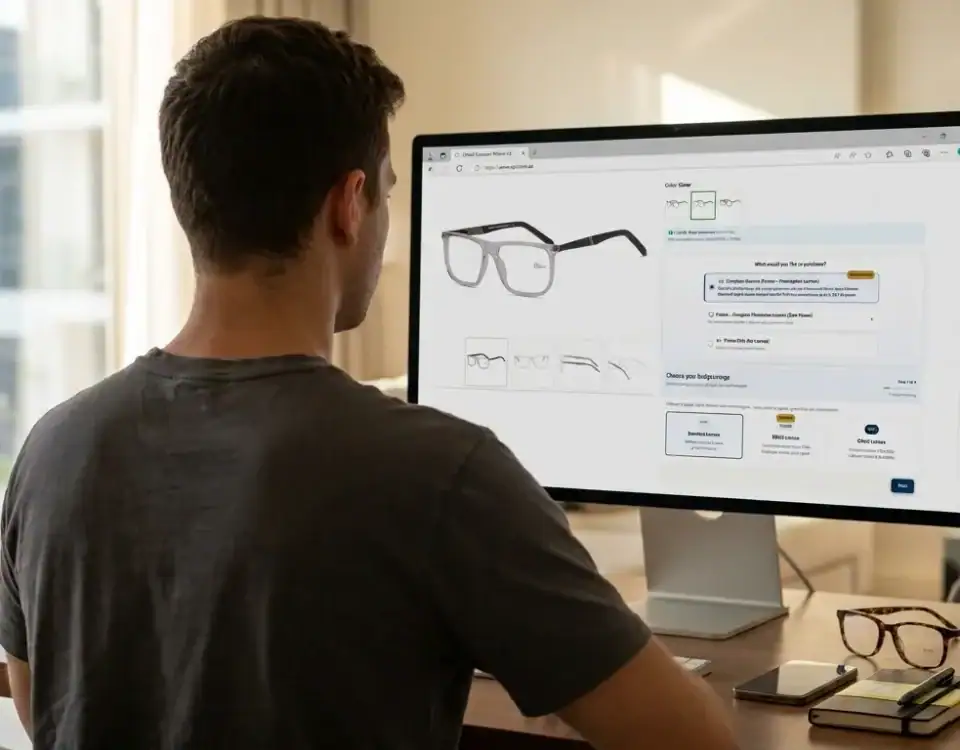
You can order all four Transitions lens types online. On any frame’s product page, choose the Buy complete eyeglasses (frame + lens) option, then select your Crizal or BBGR lens with your preferred Transitions type. Add your prescription, and we’ll deliver across the UAE.
Prices for each Transitions lens type are available on request — message us on WhatsApp for a quote. Prices and availability are correct at time of publication and subject to change.